Spending this past week installing Everything We Love We Will Lose has genuinely stayed with me. As with any exhibition, there has been real attention given to the objects, the layout and the interpretation, how things sit in the space, how stories are told, and how visitors are guided through the work. All that matters, and it has been thoughtfully considered here. But this exhibition has also asked something more of those involved in bringing it together. Alongside the practical and curatorial decisions, it has prompted moments of reflection that sit beyond the usual considerations, shaping how the work is approached as much as how it is presented. As a result, this project has felt particularly human, shaped by people, by sensitivity, and by a willingness to engage with something we often avoid talking about.
Working with YARA + DAVINA, colleagues at National Trust Clandon Park, and our own team at Lightbox Gallery & Museum, this has been a rich partnership. It has also been a collaboration with many others, including florists, a tattoo artist, embroidery specialists, volunteers, grief tenders, community participants, and a filmmaker capturing the process as it unfolded. The project has been guided by the artists YARA + DAVINA, whose leadership and attentiveness have held the work throughout. I met some of the people involved during the process, though not all, and contributed where I could, but it is important to say this has been a genuinely collective effort, built through many hands and voices. That sense of shared commitment is palpable in the space.
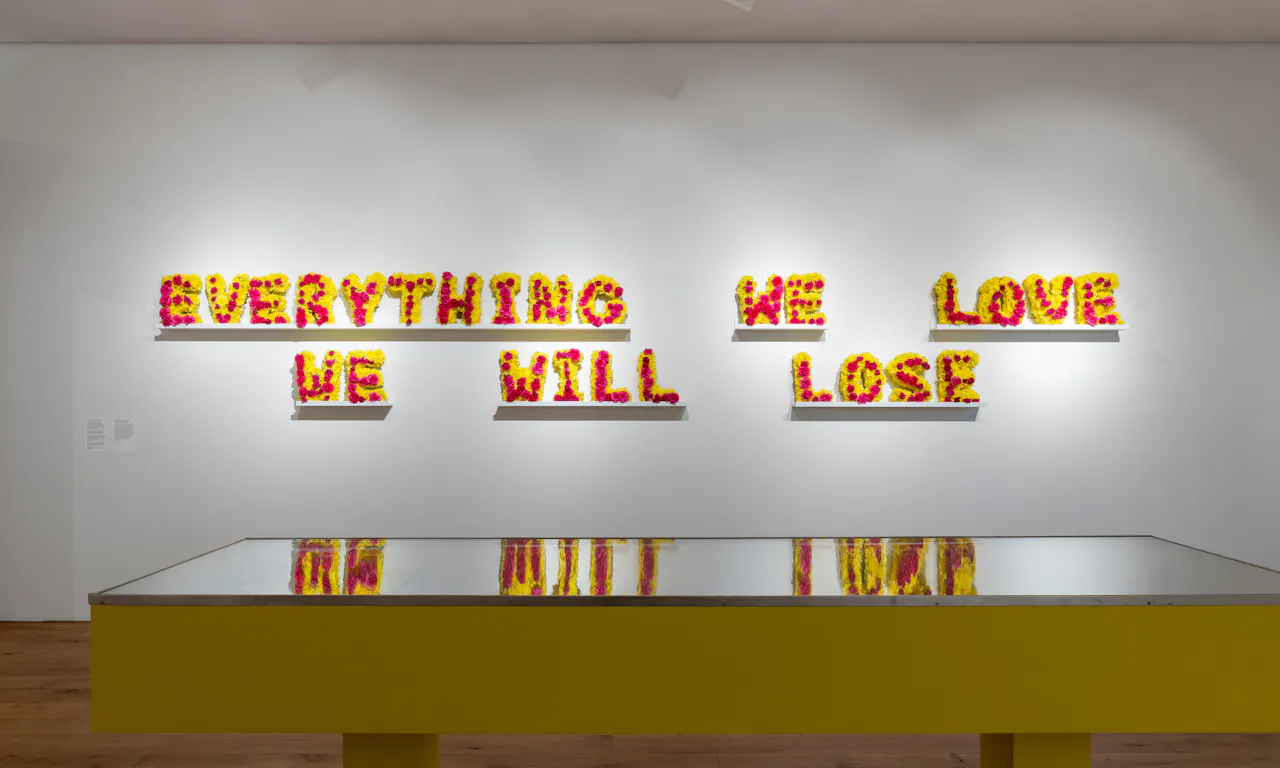
The first thing you encounter when you walk in is the floral tribute, and it is hard to overstate how striking it is. At six metres in length, made with real flowers, it is genuinely beautiful and quite breathtaking. As the centrepiece of the exhibition, it immediately draws you in. Created with a local bereavement group, it reflects familiar rituals of laying flowers for the dead, while its gradual decay marks the passing of time and the fragility of life. In many ways, it becomes a quiet anchor for everything else in the space, reminding us of impermanence and the cycles of nature.
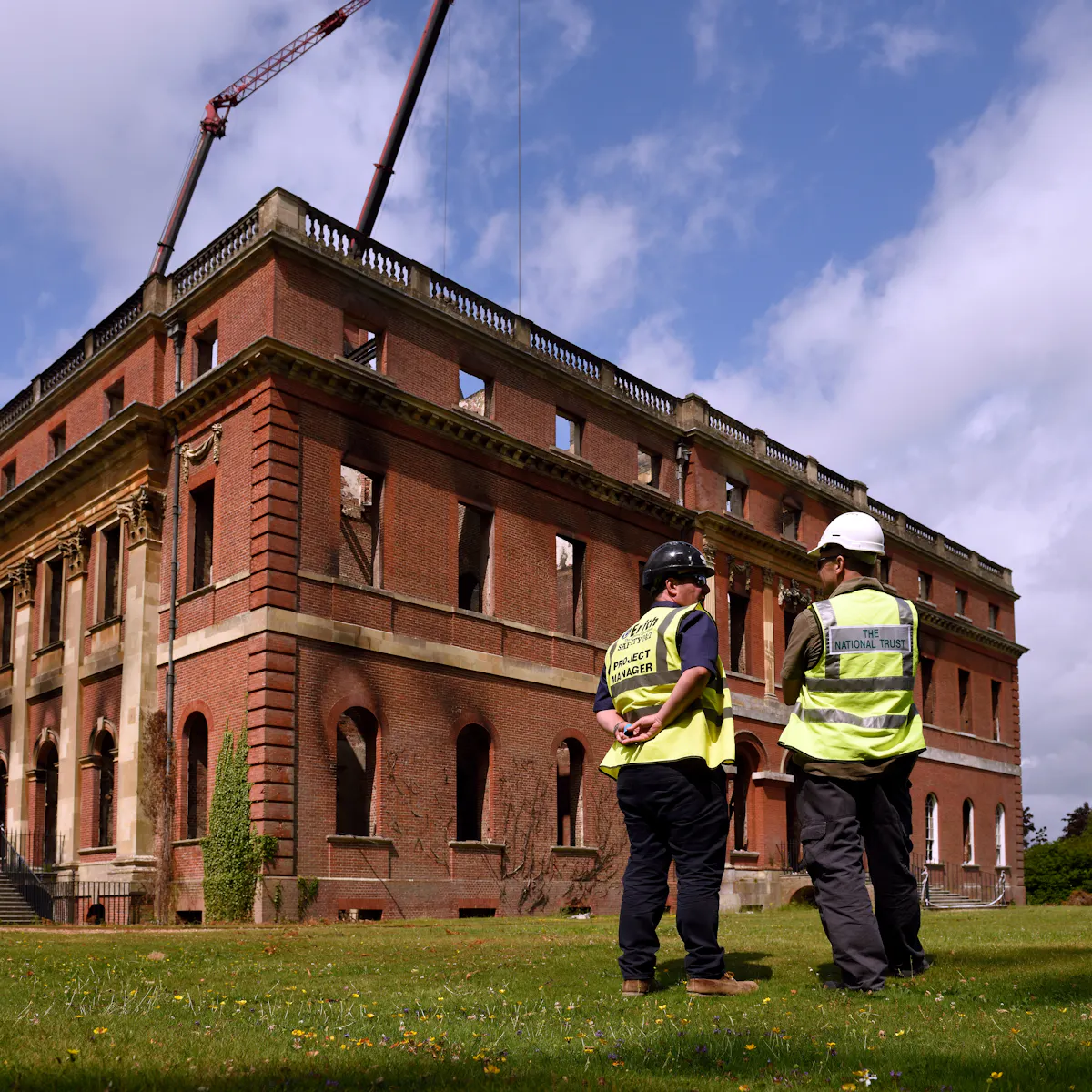
What sits behind this work is a longer process of research and listening. Over two years, the artists explored the histories of Clandon Park and Woking, returning to the theme of loss. At Clandon, the 2015 fire left the building physically scarred, and what is so striking is that this damage has not been hidden. Instead, it has been acknowledged and held in place, becoming part of how the building is understood today. The idea of not covering over loss, but allowing it to remain visible, runs quietly through the exhibition.
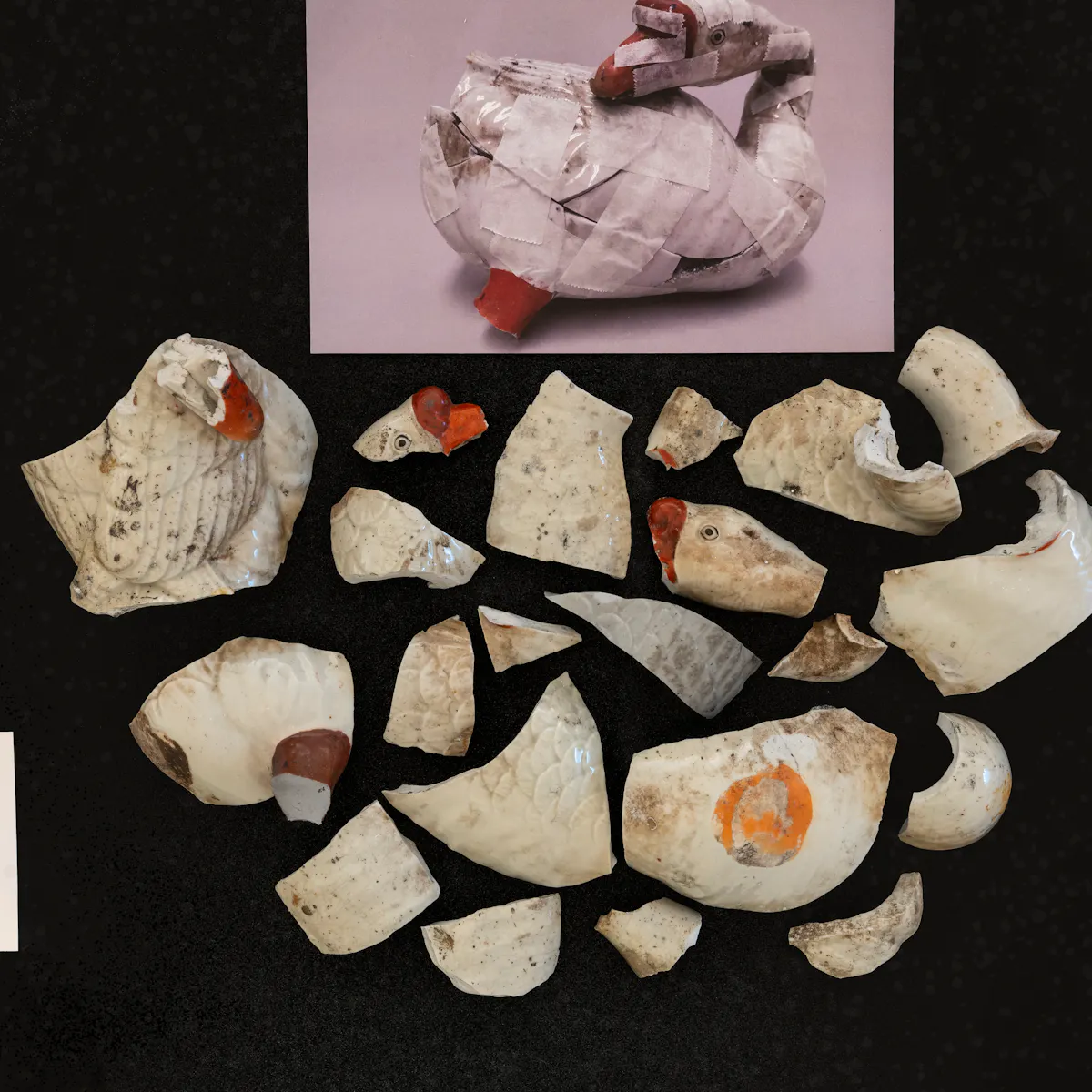
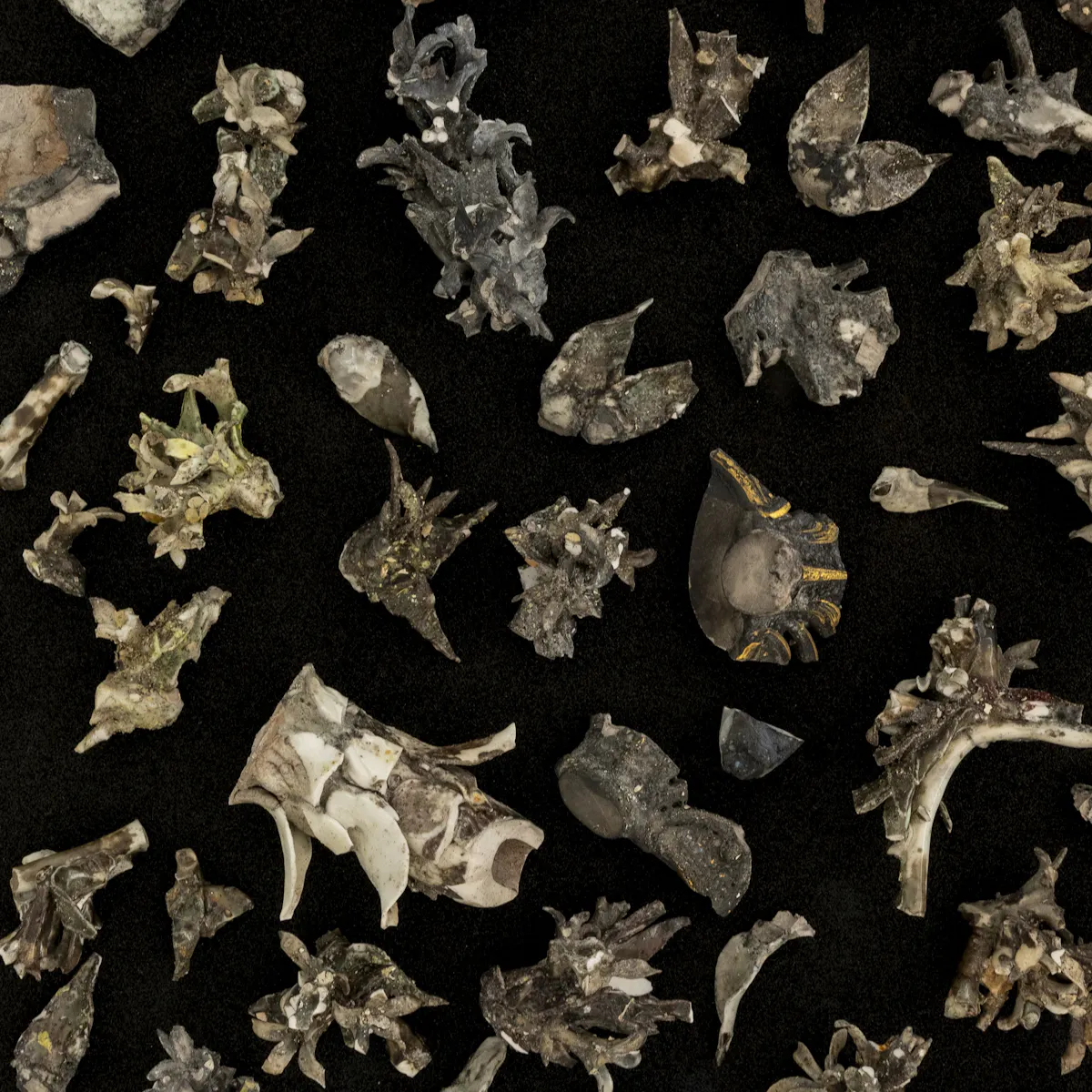
The artists were also drawn to the collections themselves. At Lightbox, Victorian mourning lace offers a way of thinking about how grief was once made visible and worn on the body, recognised socially. At Clandon, fragments of ceramics recovered from the fire sit somewhere between broken and remade. Some have been carefully bonded back together, while others remain as fragments. Neither state is presented as better than the other. Instead, they quietly ask what it means to be changed by loss, and how we carry that forward.
At the heart of the exhibition is something that is still difficult to articulate openly: grief, and in particular, pregnancy and baby loss. Through their research, the artists encountered stories in the collections, including references to miscarriage and stillbirth that had often been overlooked or under-acknowledged. This led them to work closely with local women who have experienced pregnancy loss themselves. These workshops became central to the project. The conversations were honest, sometimes difficult, and deeply generous. They shaped not only the artworks, but the tone of the entire exhibition.
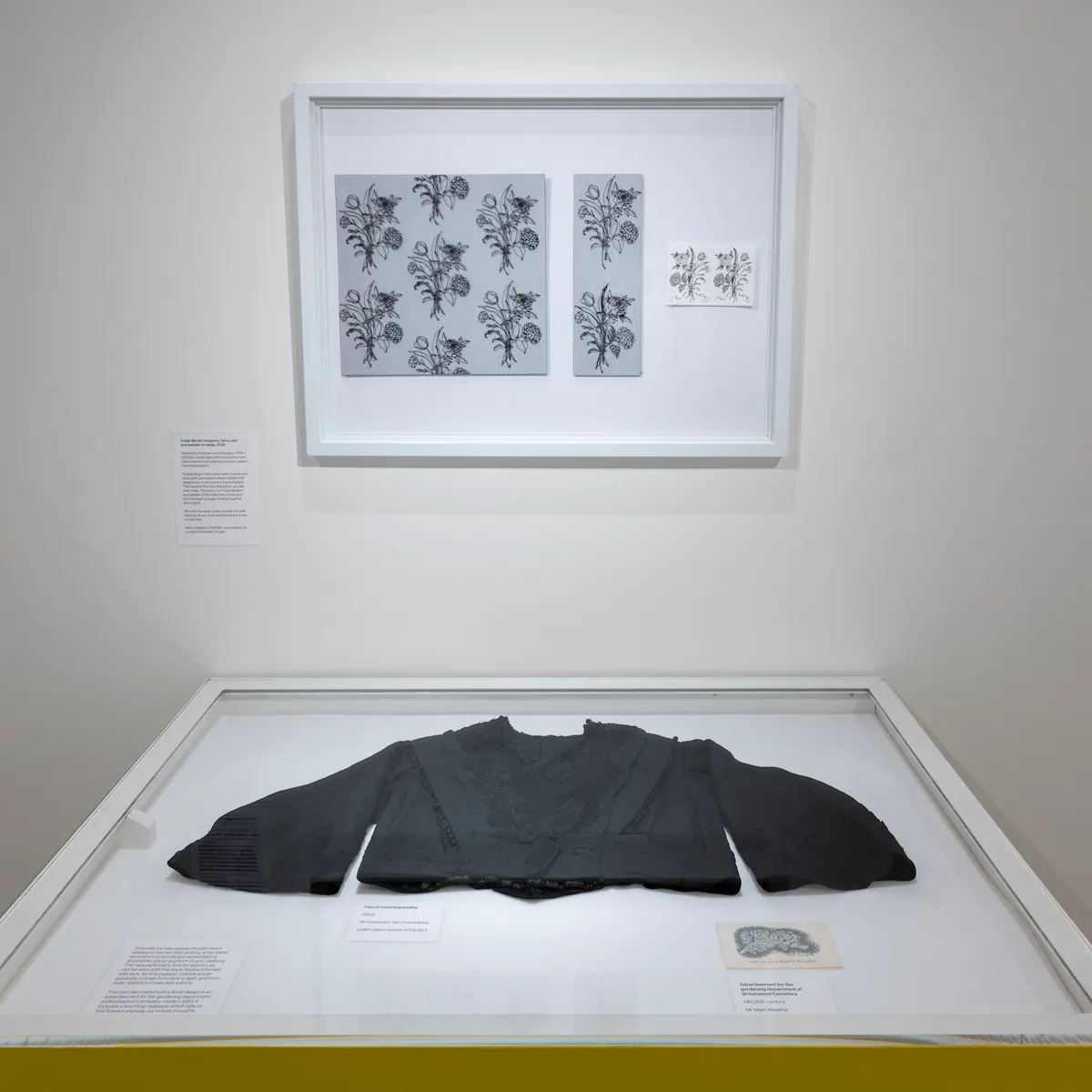
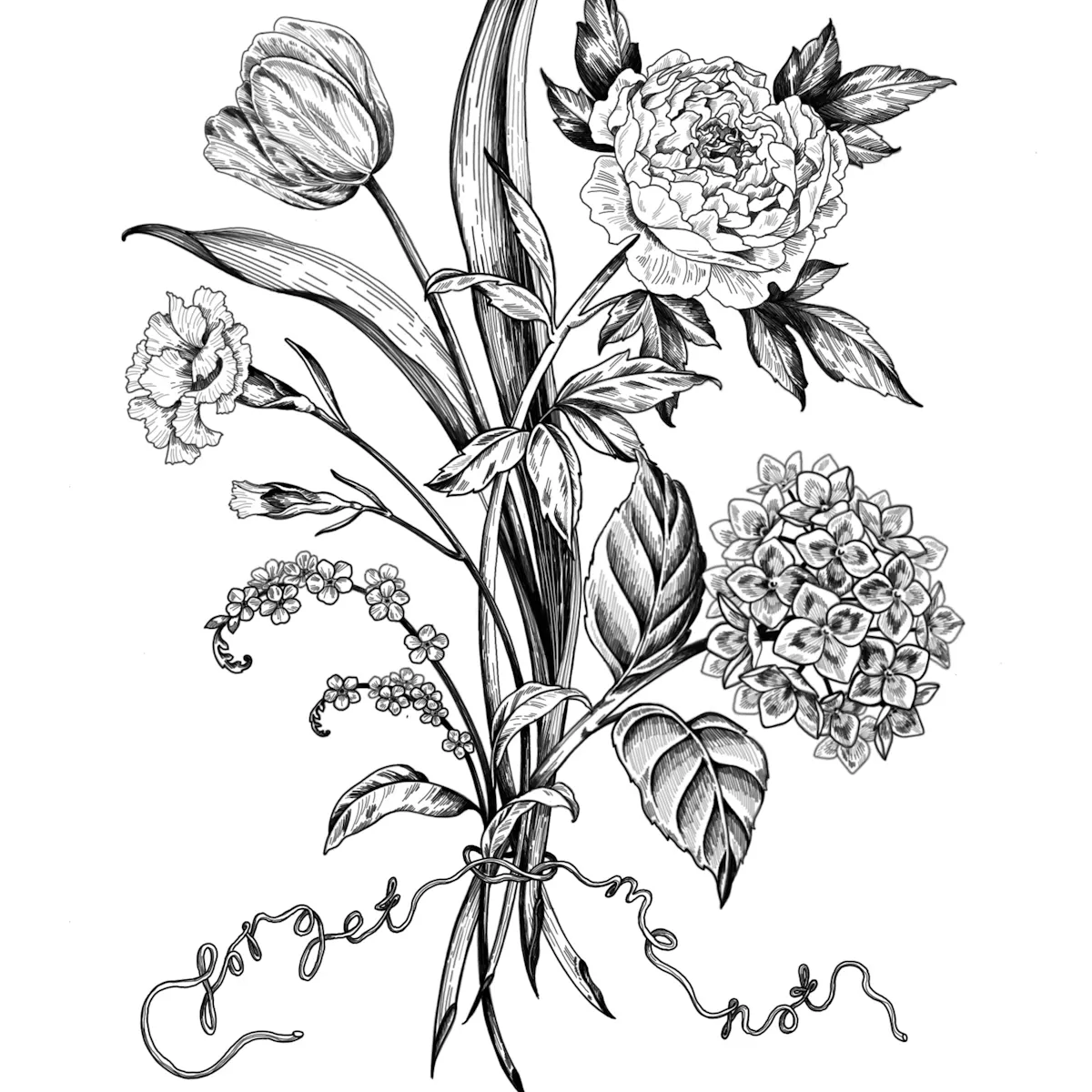
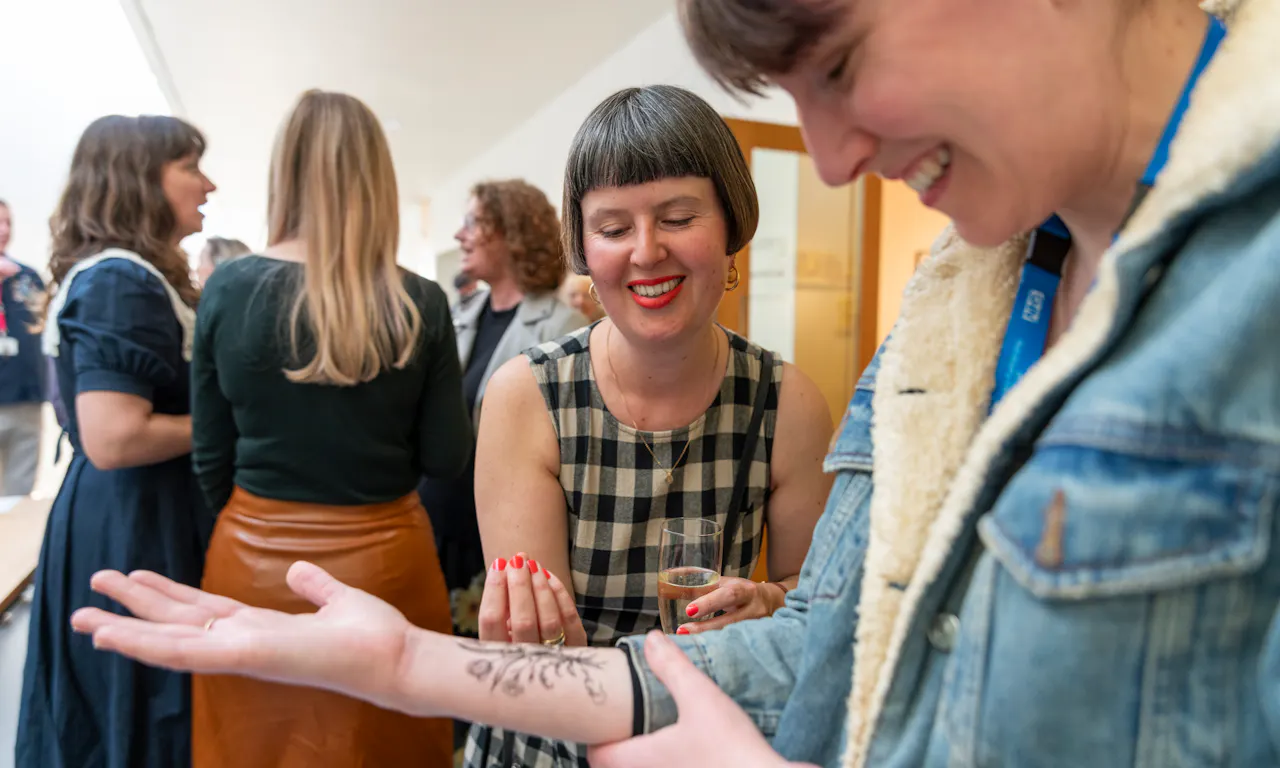
What emerges is not a single story, but a space held by multiple voices. One participant describes her child not as lost, but as still present in different ways— in warmth, in memory, and in the changes that the experience has brought to her life. That sense of ongoing connection, rather than simple absence, feels important here. One of the most thoughtful outcomes of these workshops is the Forget Me Not Temporary Tattoo. Inspired by mourning lace, the design was developed collectively and then realised with tattoo artist Ella Bell. Visitors are invited to receive two tattoos with their ticket: one for themselves and one to give to someone else who may have experienced loss. That gesture feels significant. It extends the exhibition beyond the gallery, creating a small, personal act of remembrance that can be shared. It also broadens the idea of grief beyond bereavement. As the artists suggest, loss might be the end of a relationship, a friendship, or a shift in life, something that matters deeply but is not always publicly recognised.
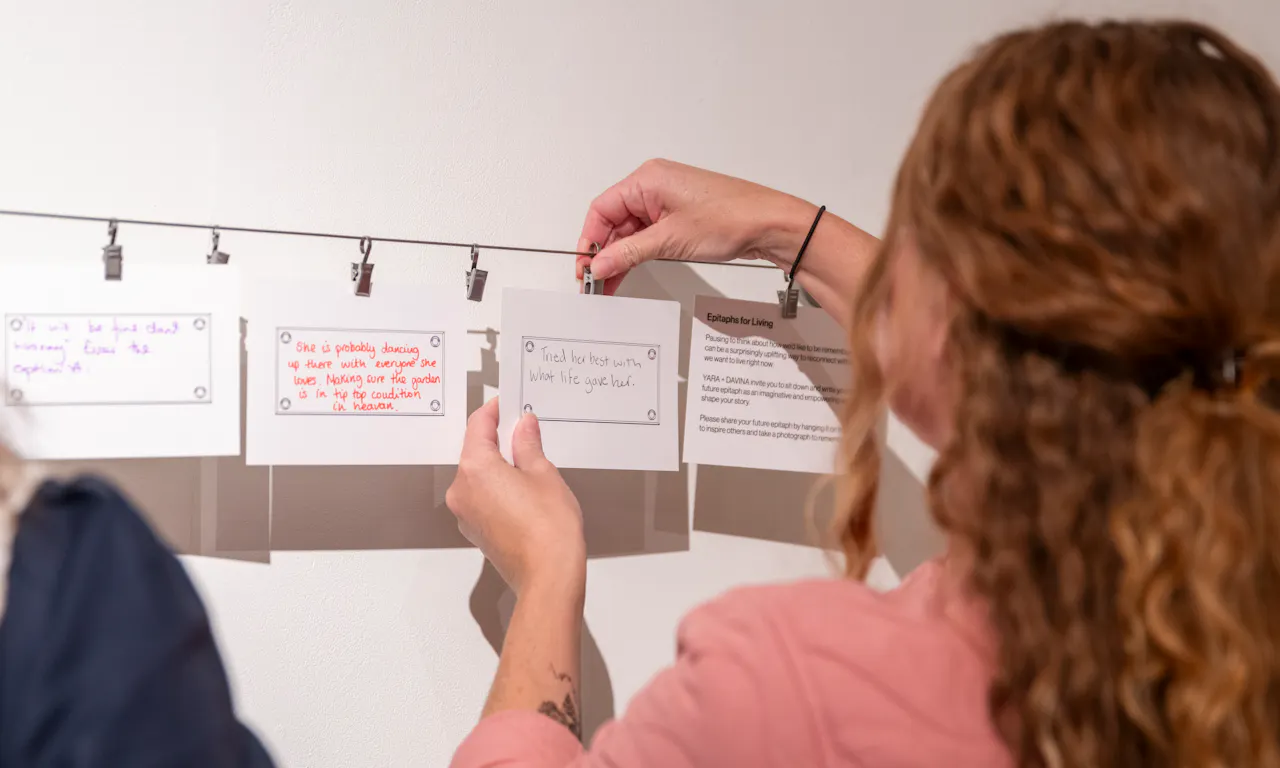
There are other moments where visitors are invited to participate. Through Epitaphs for Living, you can write your own future epitaph on a postcard and add it to the wall. It is a simple act, but often a powerful one. Pausing to consider how we want to be remembered brings us back to how we are living now. These contributions will go on to form part of a lasting public artwork, installed both at Lightbox and at Clandon Park, extending the life of the project beyond the exhibition itself.
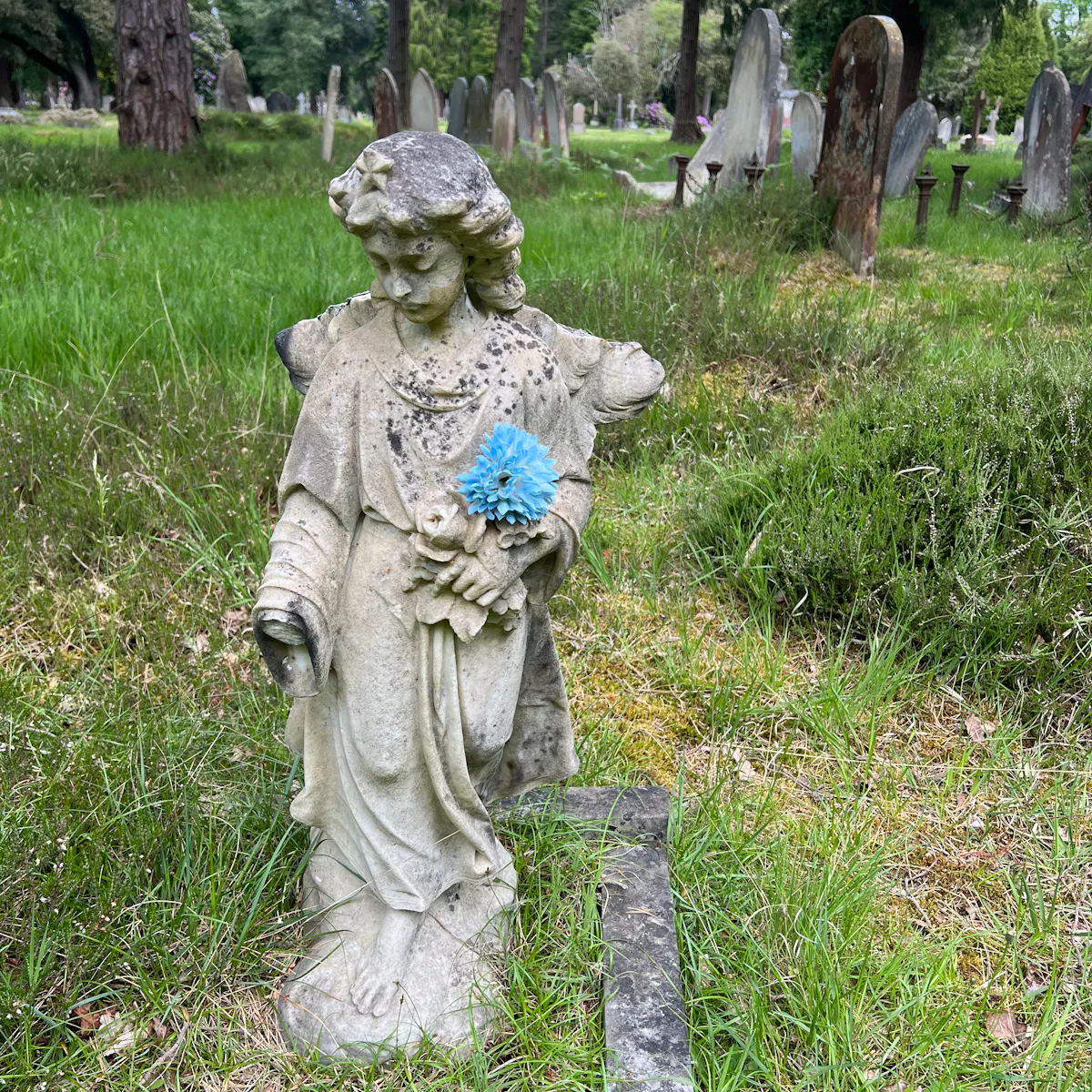
The exhibition also draws on local histories of remembrance. Brookwood Cemetery, one of the largest cemeteries in Europe, becomes an important reference point. Its landscapes of graves, flowers in various states of decay, and carefully written epitaphs have directly influenced the artists’ thinking. These connections root the exhibition in place, linking personal grief to broader histories and shared rituals.
Running through all of this is a wider way of thinking about grief, drawn from Francis Weller’s The Wild Edge of Sorrow. His idea of the Five Gates of Grief suggests that grief is not only about death. It includes everything we love and stand to lose, the parts of ourselves and our communities that have been wounded, and even the losses we experience in relation to the natural world. This is particularly resonant here. The exhibition does not try to resolve grief or give answers. Instead, it offers space to acknowledge it, to sit with it, and to recognise its connection to love, gratitude, and renewal.
There are moments within the exhibition—through text, film, and poetry—that reinforce this sense of shared experience. One idea that has stayed with me is that grief is not simply sorrow, but a reflection of connection, attachment, and the ways we hold memory. That feels like the thread running through everything here.
For me, that is why this project matters. Developed in collaboration with National Trust Clandon Park through the W for Woking commissioning partnership, it reflects what this kind of work can be at its best: bringing together contemporary art, heritage, and lived experience in a way that feels relevant, sensitive, and open. W for Woking was established to enable exactly this kind of collaboration, creating a framework for artists, organisations and communities to come together around shared histories and present-day experiences. It also shows what can happen when those relationships are built on trust, honesty, and a willingness to engage with complex, often difficult subjects.
If you come to this exhibition without knowing anything about it, that is completely fine. Take your time. There is no right way to experience it.
But I hope, in some small way, it stays with you.
Peter Hall
Carousel Images:
1. Façade of Clandon House following the fire © National Trust/John Millar
2. Installation shot of Mourning Lace from Lightbox Gallery & Museum and Forget Me Not Temporary Tattoo and lace sampler, 2026 © Deniz Guzel
3. Installation shot of a fire damaged object from National Trust, Clandon Park © Deniz Guzel
4. Visualisation of Forget Me Not temporary Tattoo, created in collaboration with local women and designed by tattoo artist Ella Bell, and tattoo being given to a visitor © Deniz Guzel
5. Photograph by YARA + DAVINA taken at Brookwood Cemetery
6. Installation shot of Fragments from a pair of Chelsea-Derby Jardinieres, c. 1770, NT object number 1440305 © Deniz Guzel